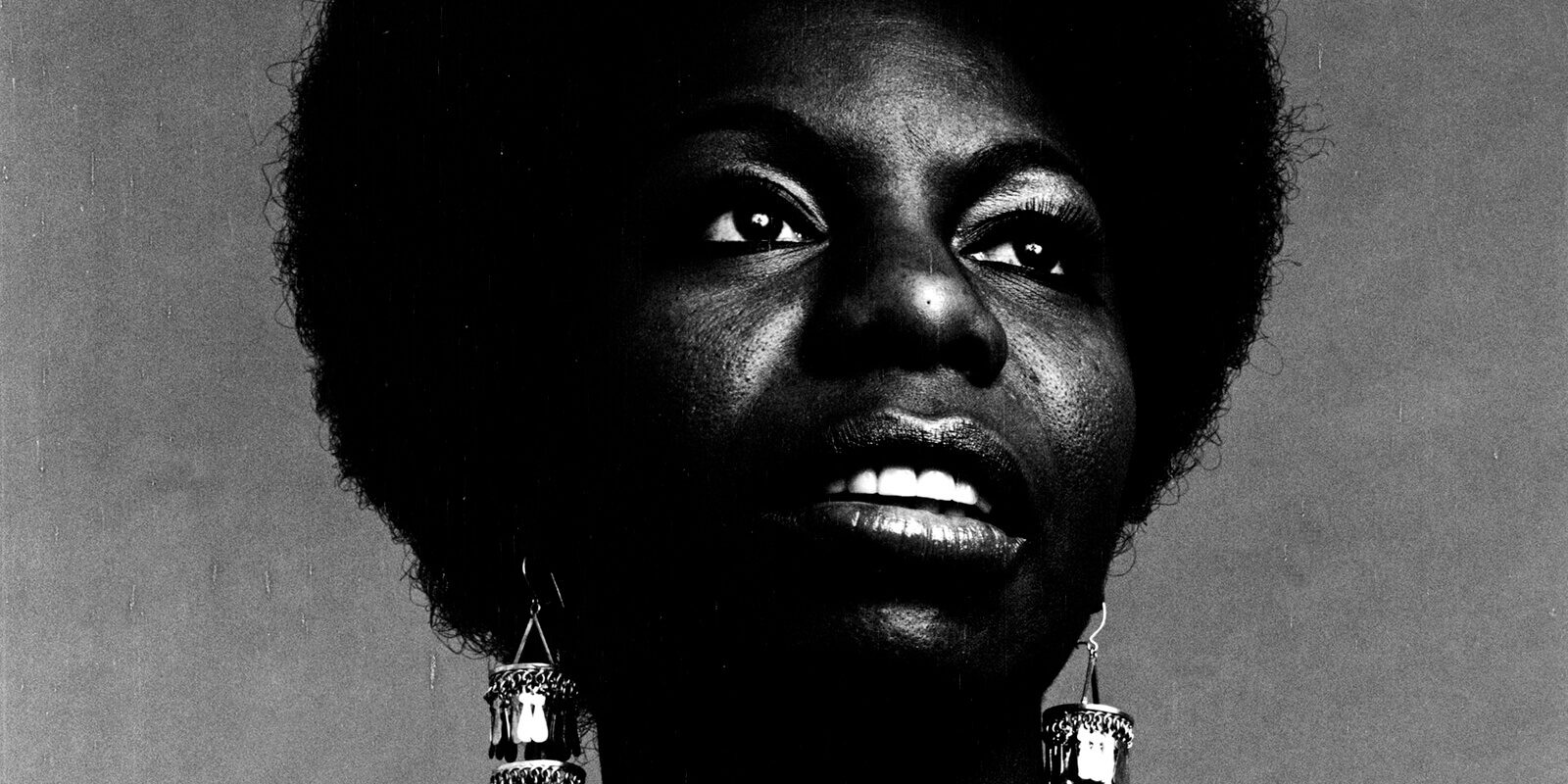
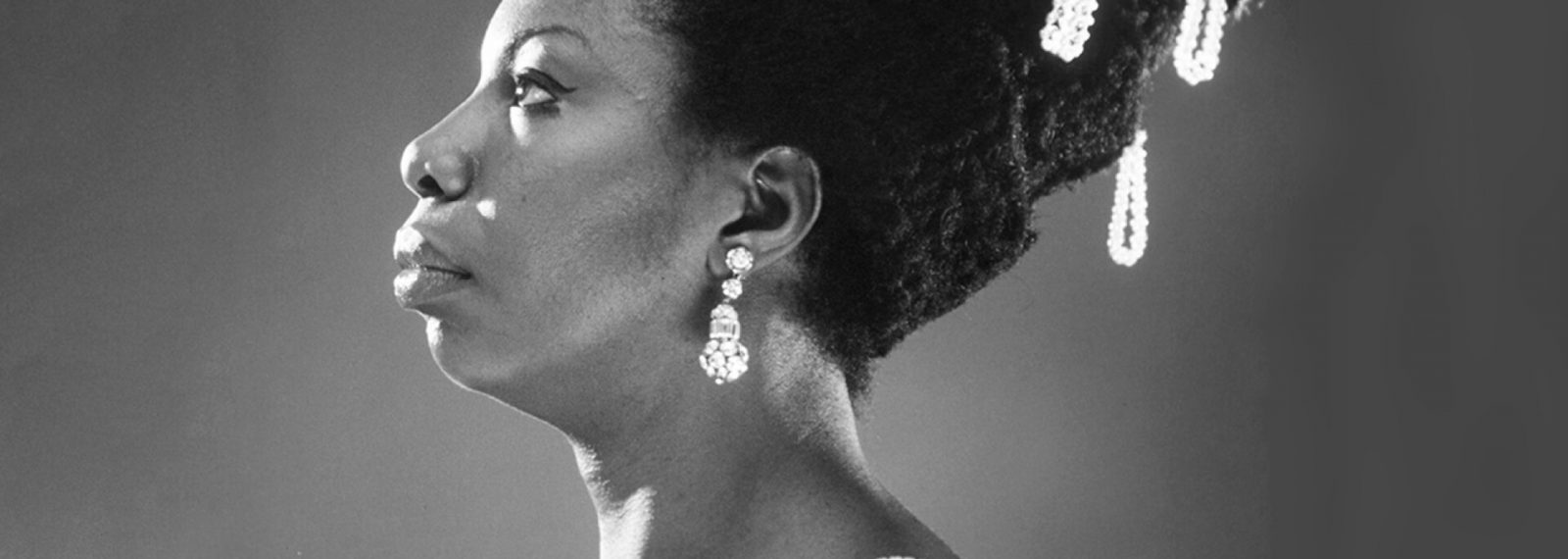
To survive, she began teaching music to local students. One fateful day in 1954, looking to supplement her income, Eunice auditioned to play piano at the Midtown Bar & Grill on Pacific Avenue in Atlantic City, New Jersey. The owner informed her that not only would she be hired to play but she was also required to sing. Despite her dreams and plans to become the first Black female classical pianist, Eunice needed the income and accepted the job.
Word spread about this new pianist and singer who was dipping into the songbooks of Gershwin, Cole Porter, Richard Rodgers, and the like, transforming popular tunes of the day into a unique synthesis of jazz, blues, and classical music. Her rich, deep velvet vocal tones, combined with her mastery of the keyboard, soon attracted club goers up and down the East Coast. In order to hide the fact that she was singing in bars, Eunice’s mother would refer to the practice as “working in the fires of hell”, overnight Eunice Waymon became Nina Simone by taking the nickname “Nina” meaning “little one” in Spanish and “Simone” after the actress Simone Signoret.
At the age of twenty-four, Nina came to the attention of the record industry. After submitting a demo of songs she had recorded during a performance in New Hope, Pennsylvania, she was signed by Syd Nathan, owner of the Ohio-based King Records (home to James Brown), to his Jazz imprint, Bethlehem Records. The boisterous Nathan had insisted on choosing songs for her debut set, but eventually relented and allowed Nina to delve in the repertoire she had been performing at clubs up and down the eastern seaboard.
One of Nina’s stated musical influences was Billie Holiday and her inspired reading of “Porgy” (from “Porgy & Bess”) heralded the arrival of a new talent on the national scene. At the same mammoth 13 hour session in 1957, recorded in New York City, Nina also cut “My Baby Just Cares For Me,” previously recorded by Nate King Cole, Count Basie, and Woody Herman. The song was used by Chanel in a perfume commercial in Europe in the 1980’s and it became a massive hit for Nina, a British chart topper at #5, and thus a staple of her repertoire for the rest of her career.
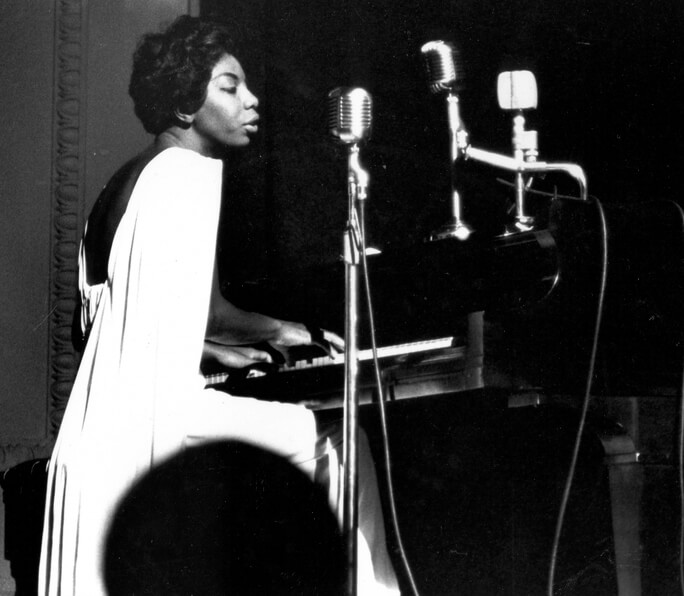
Nina Simone’s stay with Bethlehem Records was short lived and in 1959, after moving to New York City, she was signed by Joyce Selznik, the eastern talent scout for Colpix Records, a division of Columbia Pictures. Months after the release of her debut LP for the label (1959‘s The Amazing Nina Simone), Nina was performing at her first major New York City venue, the mid-Manhattan-located Town Hall.
Sensing that her live performances would capture the essential spontaneity of her artistry, Colpix opted to record her September 12, 1959 show. “You Can Have Him,” a glorious torch song previously cut by Peggy Lee and Ella Fitzgerald, was one of the highlights of the evening. The song opened with a dazzling keyboard arpeggio that would become her signature for decades. So momentous was the Town Hall performance that it inspired some of the same musicians, featuring the vocals of Nina’s only daughter, Lisa Simone Kelly, to do a tribute to a sold out audience over forty five years later.
As Nina’s reputation as an engaging live performer grew, it wasn’t long before she was asked to perform at the prestigious Newport Jazz Festival. Accompanied on the June 30th, 1960 show by Al Schackman, a guitarist who would go on to become Nina’s longest-running musical colleague, bassist Chris White, and drummer Bobby Hamilton, the dynamic show was recorded by the Colpix. The subsequent release in 1961 of the old blues tune “Trouble In Mind” as a single gave Nina her third charted record.
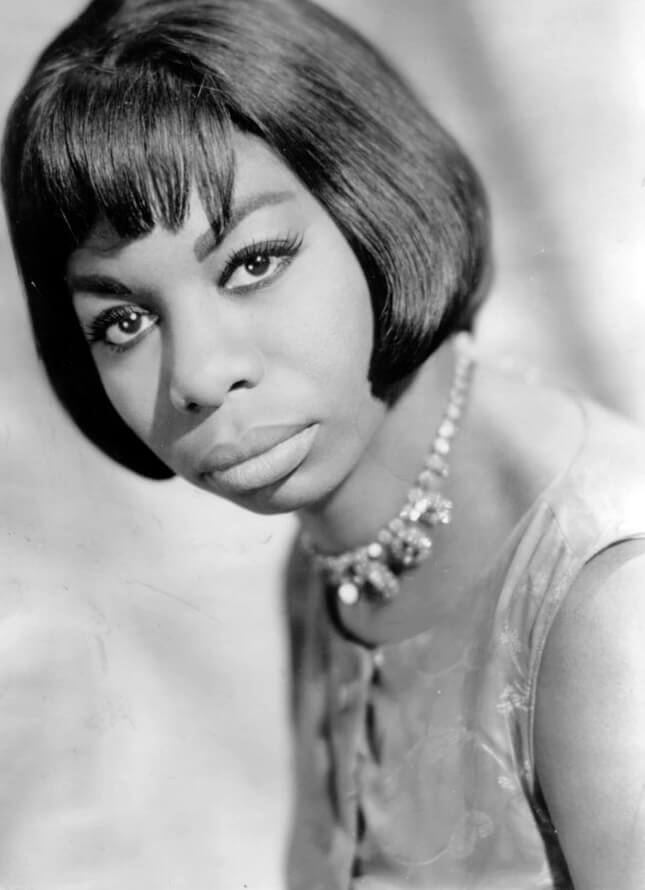
Her stay with Colpix resulted in some wonderful albums – nine in all – included Nina’s version of Bessie Smith’s blues classic “Nobody Knows You When You’re Down And Out.” Issued as a single in 1960, it became Nina’s second charted Pop and R&B hit and one of two Colpix tracks to achieve such a feat during her five year stint with the label.
Other stand out tracks from that era were the soulful song “Cotton Eyed Joe,” the torch tune “The Other Women,” and the Norwegian folk rendition of “Black Is The Color Of My True Love’s Hair” – all beautiful examples of Nina Simone at her storytelling best, painting a vivid picture with her skill as a lyrical interpreter. During this time with the label, Nina recorded one civil rights song, Oscar Brown Jr.’s “Brown Baby,” which was included on her fifth album for the label, At The Village Gate.
“Critics started to talk about what sort of music I was playing,” writes Nina in her 1991 autobiography I Put A Spell On You, “and tried to find a neat slot to file it away in. It was difficult for them because I was playing popular songs in a classical style with a classical piano technique influenced by cocktail jazz. On top of that I included spirituals and children’s song in my performances, and those sorts of songs were automatically identified with the folk movement. So, saying what sort of music I played gave the critics problems because there was something from everything in there, but it also meant I was appreciated across the board – by jazz, folk, pop and blues fans as well as admirers of classical music.” Clearly Nina Simone was not an artist who could be easily classified.
Nina’s Colpix recordings cemented her appeal to a nightclub based U.S. audience. Once she moved to Phillips, a division of Dutch-owned Mercury Records, she was ready to expand her following globally. Her first LP for the label, 1964’s In Concert, signaled Nina’s undaunted stand for freedom and justice for all, stamping her irrevocably as a pioneer and inspirational leader in the U.S. Civil Rights Movement. Her own original “Mississippi Goddam” was banned throughout the South but such a response made no difference in Nina’s unyielding commitment to liberty; subsequent groundbreaking recordings for Philips like “Four Women” (recorded September 1965) and “Strange Fruit” continued to keep Nina in the forefront of the few performers willing to use music as a vehicle for social commentary and change. Such risks were seldom taken by artists during that time of such dramatic civil upheaval.
For years, Nina felt there was much about the way that she made her living that was less than appealing. One gets a sense of that in the following passage from I Put A Spell on You where she explains her initial reluctance to perform material that was tied to the Civil Rights Movement.
“Nightclubs were dirty, making records was dirty, popular music was dirty and to mix all that with politics seemed senseless and demeaning. And until songs like ‘Mississippi Goddam’ just burst out of me, I had musical problems as well. How can you take the memory of a man like [Civil Rights activist] Medgar Evers and reduce all that he was to three and a half minutes and a simple tune? That was the musical side of it I shied away from; I didn’t like ‘protest music’ because a lot of it was so simple and unimaginative it stripped the dignity away from the people it was trying to celebrate. But the Alabama church bombing and the murder of Medgar Evers stopped that argument and with ‘Mississippi Goddam,’ I realized there was no turning back.”
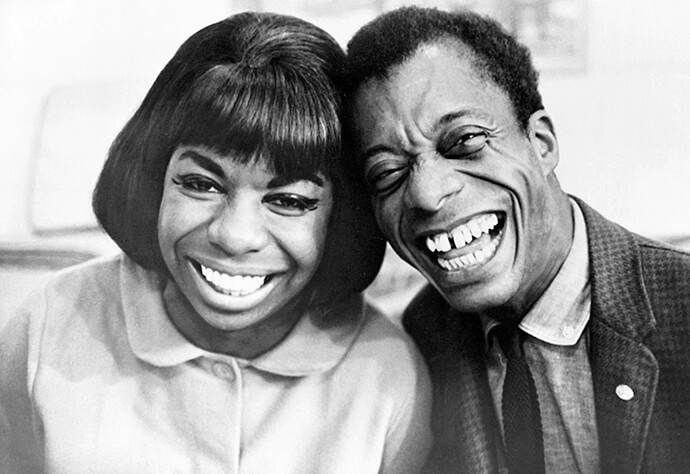
Nina was deeply affected by these two events. In 1962, she had befriended noted playwright Lorraine Hansberry and spoke often with her about the Civil Rights Movement. While she was moved by her conversations with Hansberry, it took the killing of Medgar Evers and the four girls in Birmingham to act as catalysts for a transformation of Nina’s career.
There were many sides to Nina Simone. Among her most amazing recordings were the original and so-soulful version “Don’t Let Me Be Misunderstood” and “I Put A Spell On You” (which had reached to #23 in the U.S. charts), eerily moody, unrestrained, drama to the max; “Ne Me Quitte Pas” tender, poignant, filled with melancholy; and with gospel-like fervor, the hypnotic voodoo of “See-Line Woman.” In her own unrivaled way, Nina also loved to venture into the more earthy side of life. After she signed with RCA Records in 1967 (a deal her then husband/manager Andy Stroud had negotiated), her very first recordings for the label included the saucy “Do I Move You?” and the undeniably sexual “I Want A Little Sugar In My Bowl” which were from the concept album entitled Nina Sings The Blues. Backed by a stellar cast of New York CIty session musicians, the album was far and away Nina’s most down-home recording session. By this time, Nina had become central to a circle of African American playwrights, poets, and writers all centered in Harlem along with the previously mentioned Lorraine Hansberry, James Baldwin and Langston Hughes. The outcome from one of the relationships became a highlight of the LP with the song “Backlash Blues,” a song that’s lyrics originated from the last poem Langston Hughes submitted for publication prior to his death in May, 1967 and gave to Nina.
Nina’s seven years with RCA produced some remarkable recordings, ranging from two songs featured in the Broadway musical “Hair” (combined into a medley, “Ain’t Got No – I Got Life,” a #2 British hit in 1968) to a Simone-ified version of George Harrison’s “Here Comes The Sun,” which remained in Nina’s repertoire all the way through to her final performance in 2002. Along the way at RCA, songs penned by Bob Dylan (“Just Like A Woman”), the brothers Gibb (“To Love Somebody”), and Tina Turner (“Funkier Than A Mosquito’s Tweeter”) took pride of place alongside Nina’s own anthem of empowerment, the classic “To Be Young, Gifted, & Black,” a song written in memory of Nina’s good friend Lorraine Hansberry. The title of the song coming from a play Hansberry had been working on just prior to her death.
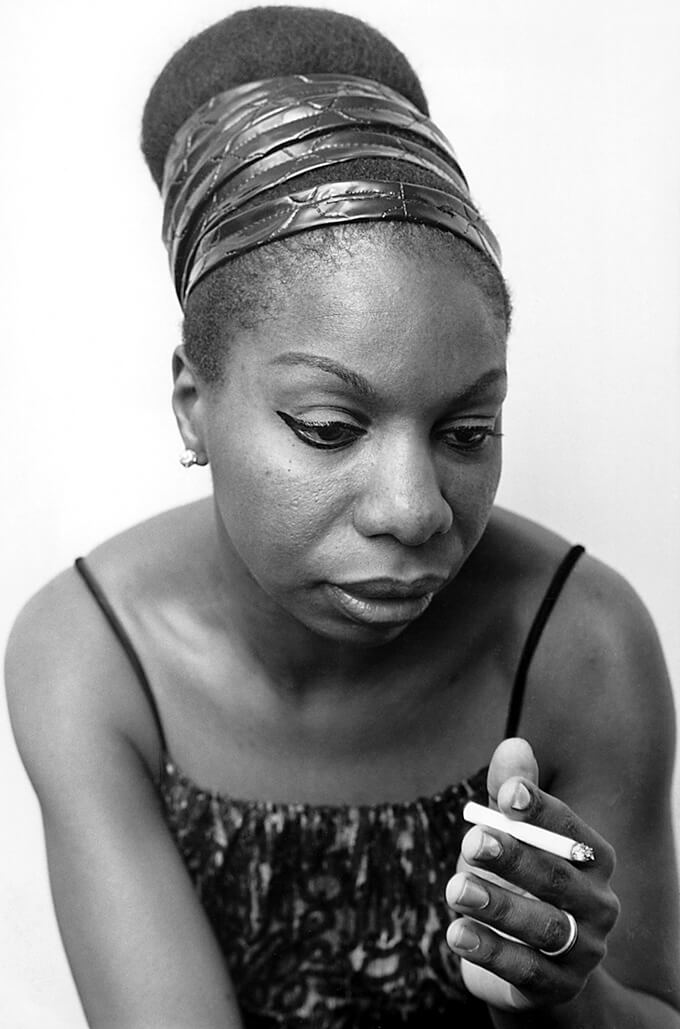
After Nina left RCA, she spent a good deal of the 1970’s and early 1980’s living in Liberia, Barbados, England, Belgium, France, Switzerland and The Netherlands. In 1978, for the first time since she left RCA, Nina was convinced by U.S. jazz veteran Creed Taylor to make an album for his CTI label. This would be her first new studio album in six years and she recorded it in Belgium with strings and background vocals cut in New York City. With the kind of “clean” sound that was a hallmark of CTI recordings, the Nina Simone album that emerged was simply brilliant. Nina herself would later claimed that she ”hated” the record but many fans strongly disagreed. With an eighteen piece string section conducted by David Mathews (known for his arrangements on James Brown’s records), the results were spectacular. The title track, Randy Newman’s evocative “Baltimore,” was an inspired Nina Simone choice. It had a beautifully constructed reggae-like beat and used some of the finest musicians producer Creed Taylor could find including Nina’s guitarist and music director, Al Schackman.
Aside from 1982’s Fodder On My Wings that Nina recorded for Carrere Records, two albums she made of the independent VPI label in Hollywood (Nina’s Back and Live And Kickin’) in 1985, and a 1987 Live At Vine Street set recorded for Verve, Nina Simone did not make another full length album until Elektra A&R executive Michael Alago persuaded her to record again. After much wining and dining, Nina finally signed on the dotted line. Elektra tapped producer Andre Fischer, noted conductor Jeremy Lubbock, and a trio of respected musicians to provide the suitable environment for this highly personal reading of “A Single Woman,” which became the centerpiece and title track for Nina Simone’s final full length album.
With two marriages behind her in 1993 she settled in Carry-le-Rout, near Aix-en-Provence in Southern France. She would continue to tour through the 1990’s and became very much ‘the single woman’ she sang about on her last label recording. She rarely traveled without an entourage, but if you were fortunate enough to get to know the woman behind the music you could glimpse the solitary soul that understood the pain of being misunderstood. It was one of Nina’s many abilities to comprehend the bittersweet qualities of life and then parlay them into a song that made her such an enduring and fascinating person.
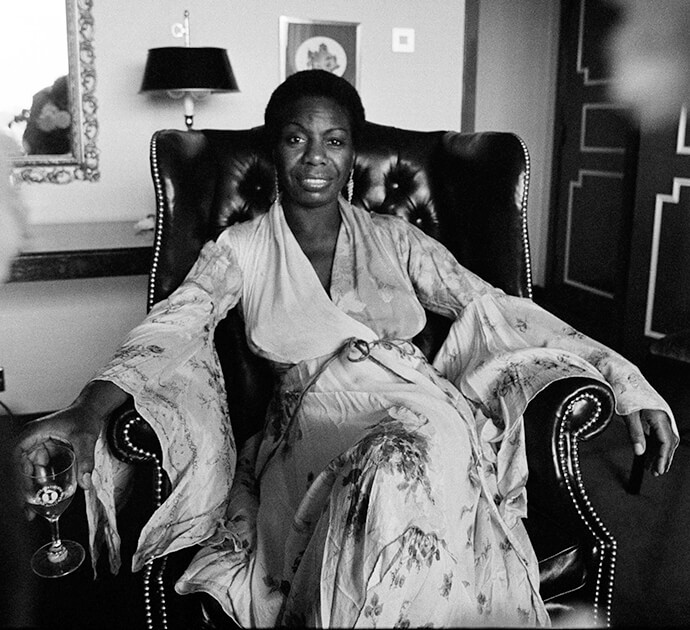
In her autobiography, Nina Simone writes that her function as an artist is “…to make people feel on a deep level. It’s difficult to describe because it’s not something you can analyze; to get near what it’s about you have to play it. And when you’ve caught it, when you’ve got the audience hooked, you always know because it’s like electricity hanging in the air.” It was that very electricity that made her such an important artist to so many and it will be that electricity that continues to turn on new people all over the world for years to come.
Nina Simone died in her sleep at her home in Carry-le-Rout, Bouches-du-Rhone on April 21, 2003. Her funeral service was attended by Miriam Makeba, Patti Labelle, poet Sonia Sanchez, actor Ossie Davis and hundreds of others. Elton John sent a floral tribute with the message, “You were the greatest and I love you”. And the legacy continues…